Tuesday, 10 January 2017

Colour and Lighting

Colour and Lighting

The first use of colour was seen in films such as Voyage a Travers L'Impossible in 1904. This was produced by a pioneer called George. They hand-printed each frame, so they are all still images. 
The next development was the introduction of two-stripcolor using only green and red, such as the film, The Mystery of the Wax Museum, 1933. After that, the introduced the first full three strip Technicolor. This was introduced by  Becky Sharp in 1935. From 1930's to the 1940's, colour represented fantasy and spectacle, while black and white represented reality. For example the film Wizard of OZ showed colour as a fantasy in the film. Colour also has a Denotation and Connotation. Denotation is the literal description of an idea, concept or object. Connotation is what we associated with a particular idea, concept or object. For example the denotation of the colour red would be an red coloured item, while the connotation of the colour red could be: Enemy, danger, death, love, anger and hot.


Image result for voyage l'impossible


Image result for denotation of red
Lighting

Films use this to exaggerate or maybe give an illusions during the films. There are many different types of lighting. Firstly, the key light is the brightest and most influential. Secondly, the back light helps counteract the effect
, the filler light helps soften the harsh shadows that the use of key and backlights create. Furthermore, the under lighting is when the main source of lighting comes from below the subject. Additionally the top lighting is when the main source of the lighting comes from above, highlighting the features. This i used to create a glamorous look. Also high key lighting and low key lighting. Low key lighting is created by using only the key and the back lights. This will produce a sharp contrast of light and dark areas of the screen to be very deep. However in high key lighting more filler lights are used , which makes the lighting more realistic.
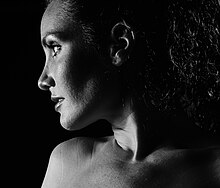
Image resultImage result for backlightImage result

The standard lighting set-up looks like this:

Key Light: The brightest and most influential light. 
Example:


Back Light: Helps counteract the effect of the key light or creates an outline or silhouette. 
Example:


Filler Light: Helps to soften the harsh shadows the harsh that the use of key and back lights create. Example: 


Friday, 6 January 2017

Preliminary Task


The story we were trying to deliver was that Ricky (Damola) was expecting cocaine from Gustavo (Patrick). Unfortunately, Gustavo did not have the cocaine, therefore, he was forced to leave, in the lead of his bodyguard (Stefan).

We used many different techniques such as: Eye line Match: We used this at the start of our short film. When there was a shot of Gustavo knocked on the door, there was another shot of me and Ricky looking towards the door. This creates more realism into our film as the audience knows what we are looking at.

Match-on-action: We used this after our Eye line Match. This is when we see a character start an action in one shot then continue it into the next shot. This is shown when Gustavo is entering the classroom by opening the door slightly from outside the classroom, then it quickly changes to another scene when Patrick is opening the door fully from the inside.

Shot/Reverse Shot: This is when the shot changes every time an action or speech occurs. This technique is very useful in conversations and arguments. We used this technique in a conversation between Gustavo and Ricky about the cocaine and the shot changes every time Gustavo or Ricky talks.

 Sound Bridge: During my editing, I decided to use a sound bridge. This is when sound carries on from on scent to another.This was shown in my background music as it played throughout the short film.

180 degree rule: This is a basic guideline rule that states that the two characters in the same scene should always have the same left and right relationship to each other. We followed this guideline rule as during the conversation between Ricky and Gustavo, they both had the same right and left relationship.

Thursday, 5 January 2017

Shifty


Shifty is a British film that was made in 2008 under the Microwave Scheme that was funded by the UK Film Council(since replaced by the BFI).The aim of the scheme was to provide young London  film makers with a platform to make a small independent film. However they had certain rules in order to make this film. Firstly, the had a budget of less than £100,000. Shifty was the second Microwave film to be released. Shifty opened in 51 small independent cinemas such as Curzon chain and on its opening weekend took £61,000. The final box takings were £143 ,000. Most of the film's came from DVD and television sales.


Shifty was distributed by Metronome. £50,000 was spent on making celluloid prints of the film, administration and advertising. They wanted to attract two types of audience. The first audience was a middle class audience that regularly sees small independent films at independent cinemas. In addition to that, they to attract a new, younger urban audience. Also, Shifty was very smart when it came to advertising. They ran adverts on pirate radio stations and used fly posters and gave out business cards which depicted Shifty as a drug dealer and directed the recipient to a website. There was also a music video on YouTube.

Shifty is a thriller that builds up slowly. There are three parts to the story, Firstly, Chris, a young man in his twenties decided to return home and visit a best friend, he has not seen for years. This causes an enigma to be set up. We the quickly learn that Shifty becomes a drug dealer. As he competes during the film, it gives us a realistic picture about urban life. The second part of the story shows that Trevor is concerned who is a drug addict and is desperate for drugs. The audience becomes more intrigued about his problem. Finally, the last part is when Shifty is placed in danger by Glen who lies and claims Shifty is changing his supplier. Shifty fears for his safety and the film builds towards a climax of tension.Overall, I enjoyed this thriller because it was based on our lives which made it exciting. This film was very effective as it had a build up of tension at the end when we didn't know how Shifty was going to get out of his situation, which for me was the best part. I would recommend this film to anyone that enjoys thrillers and is in thiller teenage age and understands our society.


Monday, 5 December 2016

Continuity Editing

Continuity Editing


Continuity Editing is the process of creating a smooth and seamless narrative experience for the audience. Also it retains a source of realistic chronology and generates the feeling that time is moving forward. Filmmakers may also use flashbacks or flashes forward, but the narrative will still be seen to be progressing forward in an expected or realistic way. The key techniques they use is Eye line match. This is when we see a character looking at something off screen and then we cut it to a shot of what they are looking at. Also they use Match-on-action is when we see a character start an action in one shot and then see them continue it in the next shot. For example in the Eastenders, when a character walks into the pub is on  shot, but then it will switch inside as they are two different shots.
Furthermore, the graphic match is when we two are linked with a similar shape or composition of a image. For example, when two consecutive shots are matched in terms of the way they look.  The filmmaker can choose to place shots in a certain order to create a smooth visual transfer from one frame to the next. For example in the Space Odyssey, there was a smooth transition between the bone and the spaceship in space. The 180 degree rue is a basic guideline that states the two characters ( a other elements) in the same scene should always have the same left/right relationship to each other. If the camera passes over the imaginary axis connecting the two subjects , it is called crossing the line.  However, there have been cases were films have deliberately broke the 180 degree rule. For example The Hunger Games deliberately broke the 180 degree rule when the bed has moved from left to right.

Friday, 11 November 2016

Mise-en Scene


This our project on the Mise-en-Scene. A Mise-en-Scene is the french term meaning "in the scene of frame. The elements of an mise-en-scene is the costume, hair, make-up, the settings, props, facial expression, body language, lighting, colour, positioning of characters and objects in the frame. The setting in our scene is a classroom and a young boy is showing all the types of facial expressions you would see in a classroom. The props we used was a chair for when Patrick was relaxing and a window for Stefan to look at, when he was disappointed. There was many facial expressions and body language shown throughout the video. These were: disappointed, relaxed, happy, crying, angry and exhausted. We can all communicate through facial expressions. This is important due to the media texts with the close up and extreme close- up.

Tuesday, 8 November 2016

Analysis of Rope


Rope is a psychological thriller. It was changed in a Patrick Hamilton's Play which appeared in 1929. The play is based upon real life murderers Leopold and Leob who killed an innocent man to see how it felt. The case became very famous in America. It was linked to the ideas of Nietzsche and his notion of Superman a morally superior being. Nietzsche's ideas influenced Hitler and the rise of the Nazis. This film was made in 1948 and directed by Alfred Hitchcock. The best aspect about this film is the editing. Hitchcock wanted to film story as one continuous take so that it would be like watching a play. However, before digital, film came in 10 minutes rolls. Hitchcock had to compromise and each unedited scene was 10 minutes long. Using this editing technique creates a feeling of claustrophobia. The actors and audience are both "trapped" in the film. The trunk with the body present throughout the scene add tension. Most thrillers use devices such as Suspense. This is when we constantly wait for the body to be discovered. Finally a cliffhanger was used at the end of the film with Rupert Cadell as we dont know if he would killed by Brandon and Phillip.

Thursday, 3 November 2016

North by Northwest

North by Northwest


Background of the film 
 Roger O. Thornhill is mistaken for a fictional US government agent named George Kaplan by a gang of spies, headed by  Phillip Vandamm (James Mason) and his mistress Eve Kendall. Kidnapped and then framed for the murder of a United Nations diplomat, Thornhill goes on the run across America in order to clear his name and to expose the activities of the foreign spies. After surviving an encounter with a sinister crop-duster plane and an exploding gasoline tank truck, the film climaxes with a memorable chase across Mount Rushmore. The film was made in 1959 and directed by Alfred Hitchcock. Devices used is suspense, in the Share Cropper Scene. Also a red herring is used when we think that Thornhill is dead when Eve Kendall shoots him. Finally, cliff hangers is used when Thornhill and Kendall are literally hanging on to the edge of a cliff in  the Mount Rushmore finale.  

Camera Angles

North by Northwest use many types of Camera angles such as: shot, movement, position; high or low tilt; long, medium or close up; wide shot, over the shoulder, zoom, reverse shot, point of view. Firstly, they use short, medium and long shot. They use a short shot when Roger and Eve had an intimate scene together in the train carriage. This is to create a romantic feeling to the audience.    Secondly, they use a long shot to show the historic landmark of America, Mount Rushmore. North by Northwest also use many types of camera work such as: tracking, pan, steady cam, rolling, hand held, deep focus and so on. For example they used a rolling shot when the recorded the train going past a station.  They also use speed and style to perfect their editing skills. Examples of styles could be straight cut, dissolve, fade, wipe and jump cut, to maybe change from scene to scene. 

Hitchcock’s Ideas


The women in Hitchcock films are often coded by hair colour.  Blondes are icy, reserved, emotionally damaged and distant, but still serve as an obsession for the male protagonist.  Brunettes are more maternal, more emotionally present, more willing to serve the male protagonist's needs, but are often ignored by the male protagonist.